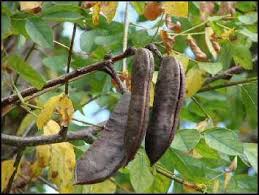
The nuts of this tree were used by early settlers, trappers and guides like Uncle John as a coffee source.
The taste no doubt was strong, much like chickaree coffee or bark coffee or Kona Coffee. It was referred to as “coffee nuts”. Picture it now….. smashed with a boot heel then tossed into a pot of boiling water on the campfire. Let the campfire coffee simmer until all the grounds come to the top, pour to your cup, straining the grounds with your bowie knife or back of your plate….mmmmm
Now then, they didn’t have a grocery store to run to, although I am sure that if ”Sam” would have thought about it, he would have opened a store on the Oregon trail.
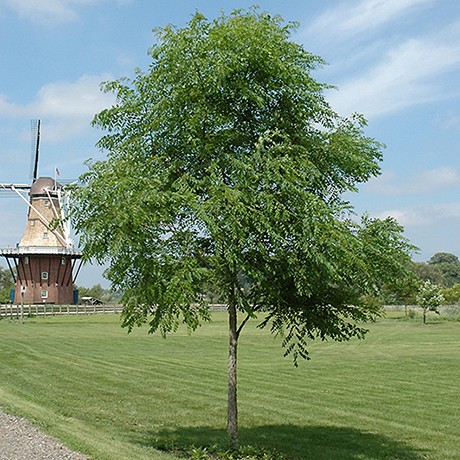
Even if one were not to brew the coffee over a campfire, the tree is a beautiful shade tree.
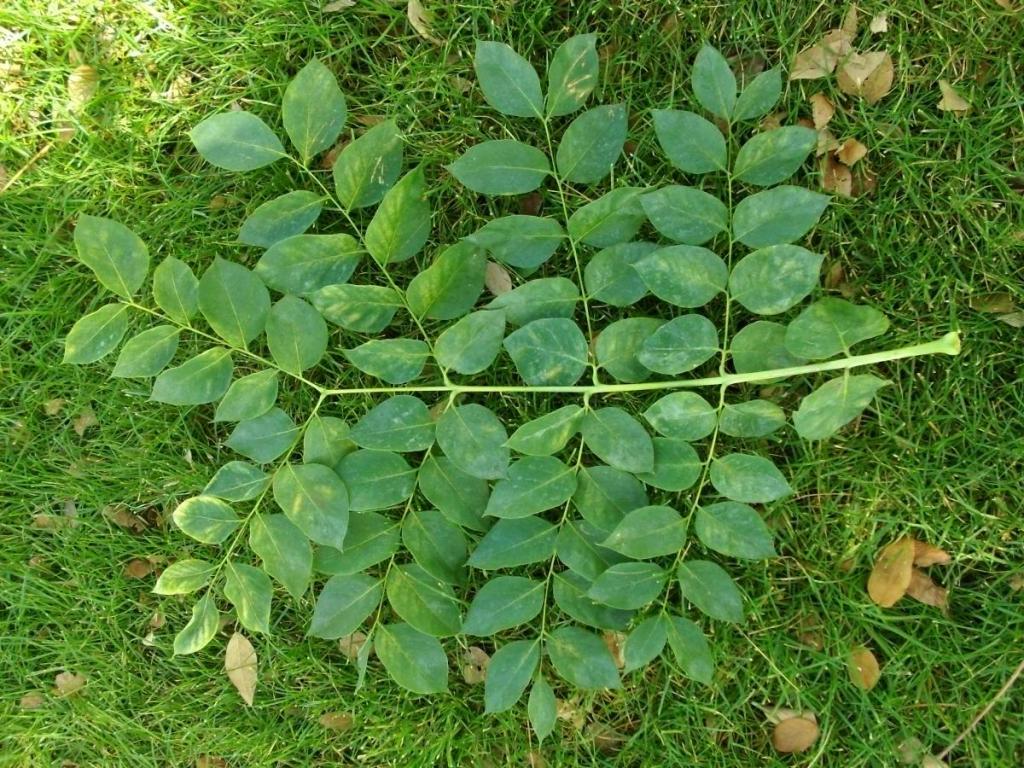
It is an easy tree to care for. It has a large “sweet pea” pod to a healthy 6 inches long with the above leaves which disappear with mowing. Then because of it’s minute structure, the sun shines through it as though the branches were not even there. Hence, this is a great tree to plant on the south / west side of your house. It provides great shade in the summer but disappears in the winter time when you need the sun’s warmth.
The seed pods are large and hold seeds the shape of an M&M only twice the size, yum yum but don’t taste them.
Basic protocol for planting Kentucky Coffee seeds is, like mother nature would provide, however the hard outside of the seed itself will not deteriorate well without help.
Next with seeds from the pods:
Remember Mother Nature provides the digger and an inbred technique for planting nut seeds = the squirrel !
Chatter will pic it up, taste to see if worth saving, plant it in a shallow enough spot that it can be found later.
After a winter’s rest, and a supply of moisture , it comes alive.
Let’s see if we can duplicate that process to shorten it a bit.
First, peel the pods to get the seeds. Save only the dark colored shiny ones.
Then, in a zip loc bag……. O my gosh, what would I have done in 1850…. Probably plant the pod whole! J However they may never germinate.
Since they must go through the winter before germinating, simulate that step by tossing the bag in the freezer for two to three weeks or leave it outside where it is safe, but freezes.
Then after thawing, pretend that you are a squirrel and take a “nip” out of the seed….. no silly, not with your teeth….. an electrical wire cutter or strong scissors will do….. just a small one mind you…. The size of a squirrel tooth. You know, not nearly the size of a cubit 🙂
Then, plant the seed (probably three to the hole because germination might be 30%) about the depth that a squirrel would plant……… okay to the point, ½ to 1 inch below the surface of the ground.
Now lets simplify the process a bit. Place the seeds that have been frozen in non metallic shallow dish or bowl that is at least 1 inch deep. Then boil a cup or two of water. Let the water quit bubbling then pour over the seeds , covering them at least ½ inch. Let ‘er set for at 24 hours , while the hot water and soaking has softened the rock hard shell. If any seeds float, toss them. The remaining should start to swell. When the have started to swell, it is time to plant them. Use peat pots filled with light potting soil mixed with a bit of peat moss or a prepared potting mix. Moisten the soil slightly so that you can push your finger in it to make a hole an inch or so deep. Then drop one of the swollen seeds in each hole. Water enough to soak the peat pot, then very lightly until the germination process lifts your tree upward ! Just like in nature, not all seeds will germinate, nor will they at the same time.
That’s it…… that’s the story of the Kentucky Coffee tree (don’t wait for a cup of the coffee that it provides) as I don’t know how it would taste ……J Now you know how to plant one.
I planted the seeds from one pod and 10 years later , they are 25 feet tall. When planting them in the ground , protect them from the rabbits and deer. Remember that they will grow as wide as they are tall, so plant them at least 25 feet apart.
They will grow in Zone 4 in easy winters to Zone 8 or 9 but they really love it in Zones 5 and 6.
Rich Hoback with Natures-Invitation helping you learn and experience Nature .
 Invitation Into Nature....... With Rich Hoback
)
)
)